
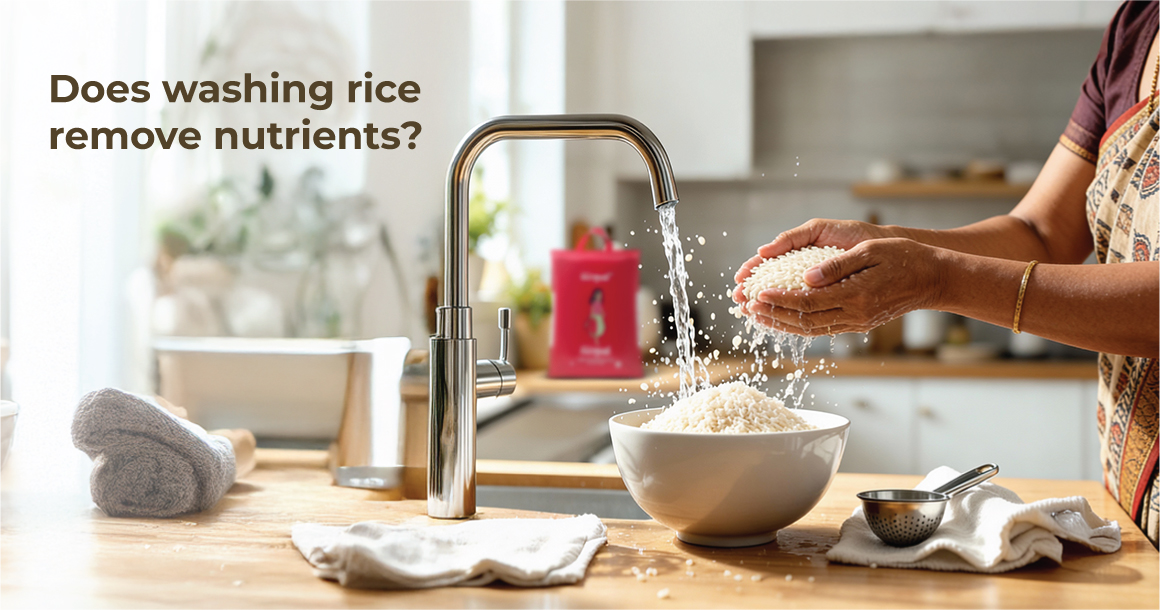
Does Washing Rice Really Remove Nutrients From the Rice?
Washing rice can remove some nutrients from the rice, but the loss is small and not enough to avoid washing it altogether. Rice contains essential nutrients such as vitamins and minerals, and washing can wash away a small portion of the water-soluble ones. At the same time, washing rice also removes excess surface starch, which helps improve its texture and prevents it from becoming too sticky when cooked.
People wash rice mainly to remove dirt, dust, and tiny impurities that may be present after processing. Washing also improves taste and appearance. Since rice is a staple food for millions of people in India and across the world, it is important to understand the right way to wash rice so that we keep most of its nutrients while still making it safe and tasty to eat.
Rice is eaten almost every day in many households. Before cooking, one common question always comes up:
Does washing rice remove the good nutrients from it?
Yes, a little but not enough to stop washing rice. Washing rice is still a good and healthy practice when done correctly.
Why Do We Wash Rice Before Cooking?
Rice grains usually have a coating of surface starch. When rice is washed, this extra starch gets removed. This helps the rice cook better and improves its taste and texture. Washed rice is less sticky and cooks more evenly.
There are several good reasons for washing rice before cooking:
* To remove dust, dirt, and tiny impurities
* To wash away excess surface starch
* To reduce the presence of arsenic
* To improve taste, texture, and appearance
Even quality rice brands like KeerthiNirmal Rice, which go through proper cleaning and processing, benefit from gentle washing before cooking. Washing the rice lightly makes it safer to eat and improves the final dish.
Nutrient Loss From Washing Rice
When you wash rice, some water soluble nutrients can be lost. These mainly include:
* B vitamins
* Small amounts of iron and other minerals
However, most of the nutrients in rice are located inside the grain, not on the surface. Because of this, gentle rinsing does not cause major nutrient loss. Only excessive or very rough washing leads to noticeable loss of nutrients.
Rinsing rice properly is a common practice and does not significantly harm its nutritional value.
Does Rinsing Rice Reduce Nutrition?
Yes, rinsing rice does reduce nutrition slightly, but the amount lost depends on how it is washed.
* 1–2 gentle washes: Very little nutrient loss
* 5–6 vigorous washes: Higher vitamin loss
The benefits of washing rice better texture, improved safety, and reduced unwanted substances are far more important than the small amount of nutrients lost during proper washing.
Effect of Washing Rice on Nutrients
The effect of washing rice also depends on the type of rice used.
* White rice: White rice already loses some nutrients during processing because the bran layer is removed. Washing white rice does not remove many additional nutrients, as most have already been lost during milling.
* Brown rice: Brown rice retains its bran layer, which is rich in nutrients. Washing brown rice gently does not remove much nutrition, but rough or repeated washing should be avoided.
* Parboiled rice: Parboiled rice retains more nutrients because they move into the grain during processing. Washing parboiled rice causes minimal nutrient loss and is often optional.
Choosing good quality rice, such as KeerthiNirmal Rice, helps ensure better nutrition even after washing.
Does Washing Rice Remove Vitamins?
Washing rice can remove some B vitamins because these vitamins dissolve in water. This is more noticeable in enriched rice, where vitamins are added after processing. These added vitamins can be washed away easily.
If you are using enriched rice, excessive washing is not necessary. A light rinse is enough to clean the rice while keeping most of the added nutrients.
Does Washing Rice Remove Starch or Nutrients?
* Washing rice mainly removes surface starch, not the core nutrients inside the grain.
* Removing this starch prevents rice from becoming sticky or mushy after cooking.
* The important nutrients remain largely intact when rice is washed gently.
This is why washing rice helps improve texture without significantly affecting nutrition.
Best Way to Wash Rice Without Losing Nutrients
To reduce nutrient loss while washing rice, follow these steps:
- Place rice in a bowl
- Add clean water
- Gently swirl the rice with your hand
- Drain the water immediately
- Repeat only 1–2 times
Avoid:
* Rubbing or squeezing the grains
* Washing under running water for a long time
Washing rice two or three times is usually enough to remove excess starch. Overwashing leads to unnecessary nutrient loss.
How Many Times Should You Wash Rice?
* White rice: 1–2 washes
* Brown rice: 1 wash is enough
* Parboiled rice: Washing is optional
More washing leads to more nutrient loss, so gentle and limited washing is best.
Should Rice Be Washed Before Cooking?
Yes, especially in Indian cooking.
Washing rice:
* Makes food cleaner and safer to eat
* Helps rice cook evenly
* Improves taste and texture
* Reduces unwanted substances like excess starch and arsenic
Rice grows in the ground, and small particles of dust or impurities may remain. Washing removes these and ensures the rice is safe and pleasant to eat.
Even high-quality rice like KeerthiNirmal Rice benefits from gentle washing before cooking.
Do You Really Need to Wash Rice?
Yes, washing rice is important.
Rice contains surface starch that makes it sticky when cooked. Washing removes this starch so the rice grains remain separate. Washing also removes dirt, dust, and any tiny impurities that may be present.
Rice is eaten daily, so cleanliness matters. Washing rice ensures it is clean, safe, and ready for cooking.
Final Thoughts
Washing rice does cause a small loss of nutrients, but the loss is minimal when done gently. The benefits of washing better texture, improved safety, and reduced unwanted substances are more important than the slight nutrient loss.
* Gentle washing causes very little nutrient loss
* Excessive washing should be avoided
* Safety, taste, and texture matter most
So yes, wash your rice but do it wisely.
Choose good quality rice like KeerthiNirmal Rice, wash it gently, and enjoy healthy, tasty meals every day.