Kaima Jeerakasala Rice: What Makes It Perfect for Biryani?
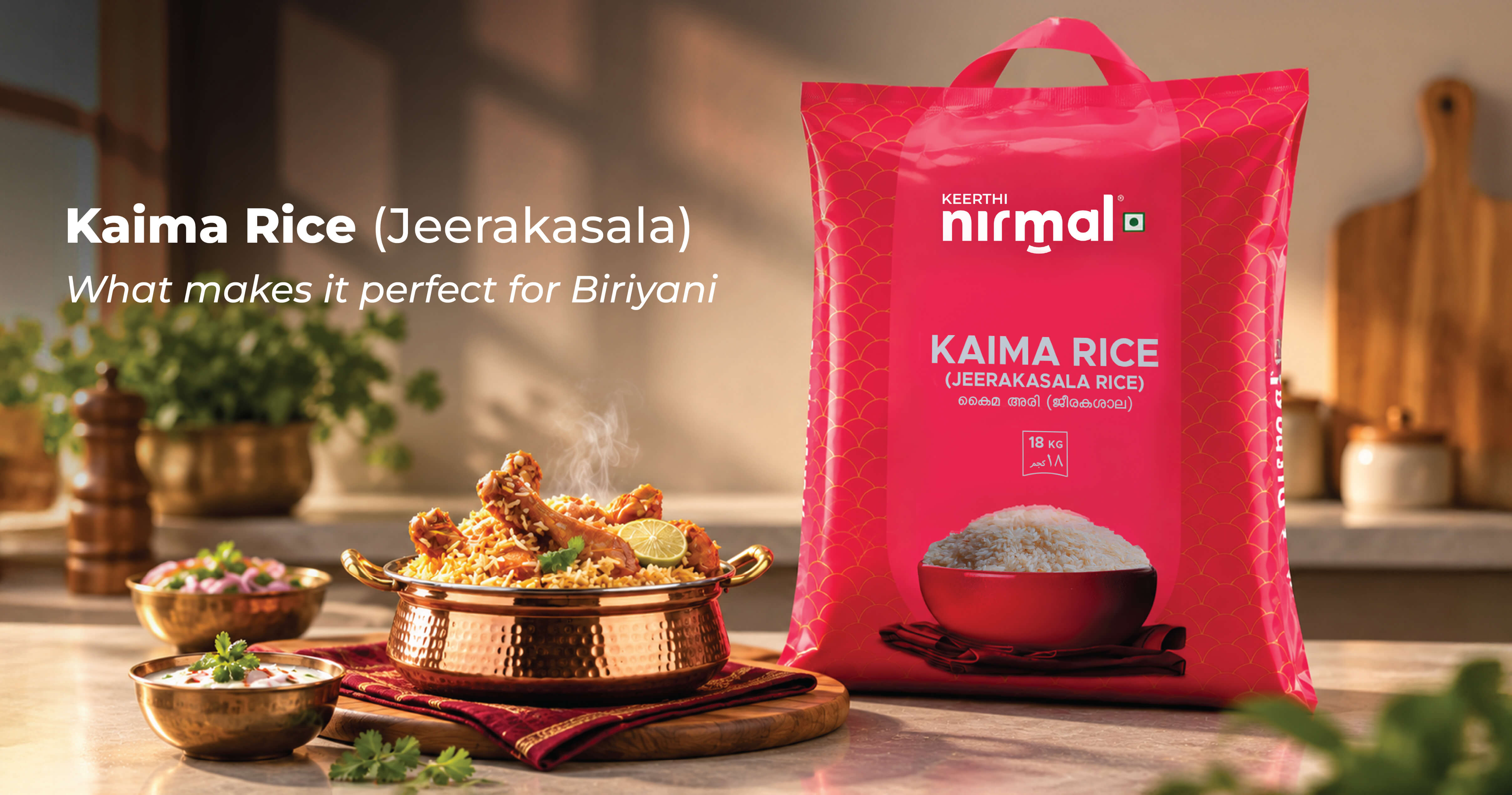
A great biryani begins with the right rice. Discover why naturally aromatic Kaima Jeerakasala Rice is loved for authentic Malabar and Thalassery biryani.
A great biryani begins with the right rice. For authentic Malabar and Thalassery biryani, that rice is often Kaima Jeerakasala Rice.
Known for its naturally aromatic short grains, Kaima rice absorbs the rich flavors of masala, ghee, herbs, and whole spices beautifully. It gives biryani a soft, moist, and satisfying texture while keeping the grains pleasantly separate when cooked correctly.
Kaima rice is naturally gluten-free, low in fat and cholesterol-free, and a source of carbohydrate energy, dietary fiber, and essential minerals. At Keerthi Nirmal, every grain is selected with care and processed for the aroma, quality, and consistency expected from premium Kerala rice.
Naturally Aromatic for Authentic Biryani
Kaima Jeerakasala Rice has a delicate fragrance that works beautifully with cardamom, cloves, cinnamon, bay leaf, fennel, and other warm spices. Its aroma is gentle rather than overpowering, allowing chicken, mutton, fish, or vegetable masala to remain the highlight.
Absorbs Biryani Masala Deeply
Its short, compact grains take in the richness of biryani stock, ghee, herbs, spices, meat or vegetable masala, and fried onions during dum cooking. That helps bring every part of the dish together into a balanced, flavorful bite.
Soft Texture With Separate Grains
When cooked correctly, Kaima rice becomes soft, tender, and moist while remaining separate. Cook the grains only until partially done before layering, then let the remaining heat and steam finish them during dum cooking. This preserves their shape and prevents a sticky texture.
A Versatile Everyday Rice
Beyond biryani, Kaima Jeerakasala Rice works beautifully for ghee rice, neychoru, vegetable pulao, festive Kerala dishes, and simple meals served with curry, dal, vegetables, fish, meat, eggs, or curd. Its carbohydrates provide energy, while its naturally low-fat, cholesterol-free, gluten-free profile makes it easy to include in varied meal plans.
Why Kaima Rice Is Ideal for Malabar Biryani
Kaima rice is not meant to imitate basmati. It creates a different, traditional biryani experience: mild natural fragrance, deep masala absorption, and soft, moist grains that remain separate. Its short-grain structure and tender texture are central to the identity of Thalassery and Malabar cuisine.
How to Cook Kaima Jeerakasala Rice for Biryani
- Wash the rice gently two or three times.
- Soak it for approximately 20 to 30 minutes.
- Boil plenty of water with salt and whole spices.
- Cook the rice until it is about 70 to 75% done, with a slight firmness in the center.
- Drain immediately, then layer with biryani masala, fried onions, mint, coriander, and ghee.
- Cover tightly and finish on low heat using the dum method.
Avoid stirring the cooked rice too much, as the small grains are delicate and can break or become sticky.
Choosing Keerthi Nirmal Kaima Jeerakasala Rice
Uniform grains, natural aroma, careful processing, and dependable cooking performance help deliver better results in every batch. Keerthi Nirmal focuses on carefully sourced grains, quality-oriented processing, and responsible delivery for authentic Kerala rice traditions and modern kitchens.
Frequently Asked Questions
Are Kaima rice and Jeerakasala rice the same?
Yes. They are commonly used names for the aromatic short-grain variety traditionally used in Kerala cuisine, especially Malabar and Thalassery biryani.
Can I use Kaima rice instead of basmati?
Yes. Kaima rice is excellent for Kerala-style biryani and produces a softer, more masala-infused result than basmati.
Does Kaima rice become sticky?
It can if overcooked, prepared with too much water, or stirred excessively. Cooking it to 70 to 75% before dum cooking helps keep the grains soft and separate.
Is Kaima rice gluten-free?
Plain Kaima Jeerakasala Rice is naturally gluten-free. Check spice mixes and other ingredients for gluten when preparing meals for someone with medically necessary gluten avoidance.