The Complete Guide to Choosing Pure Coconut Oil in Kerala
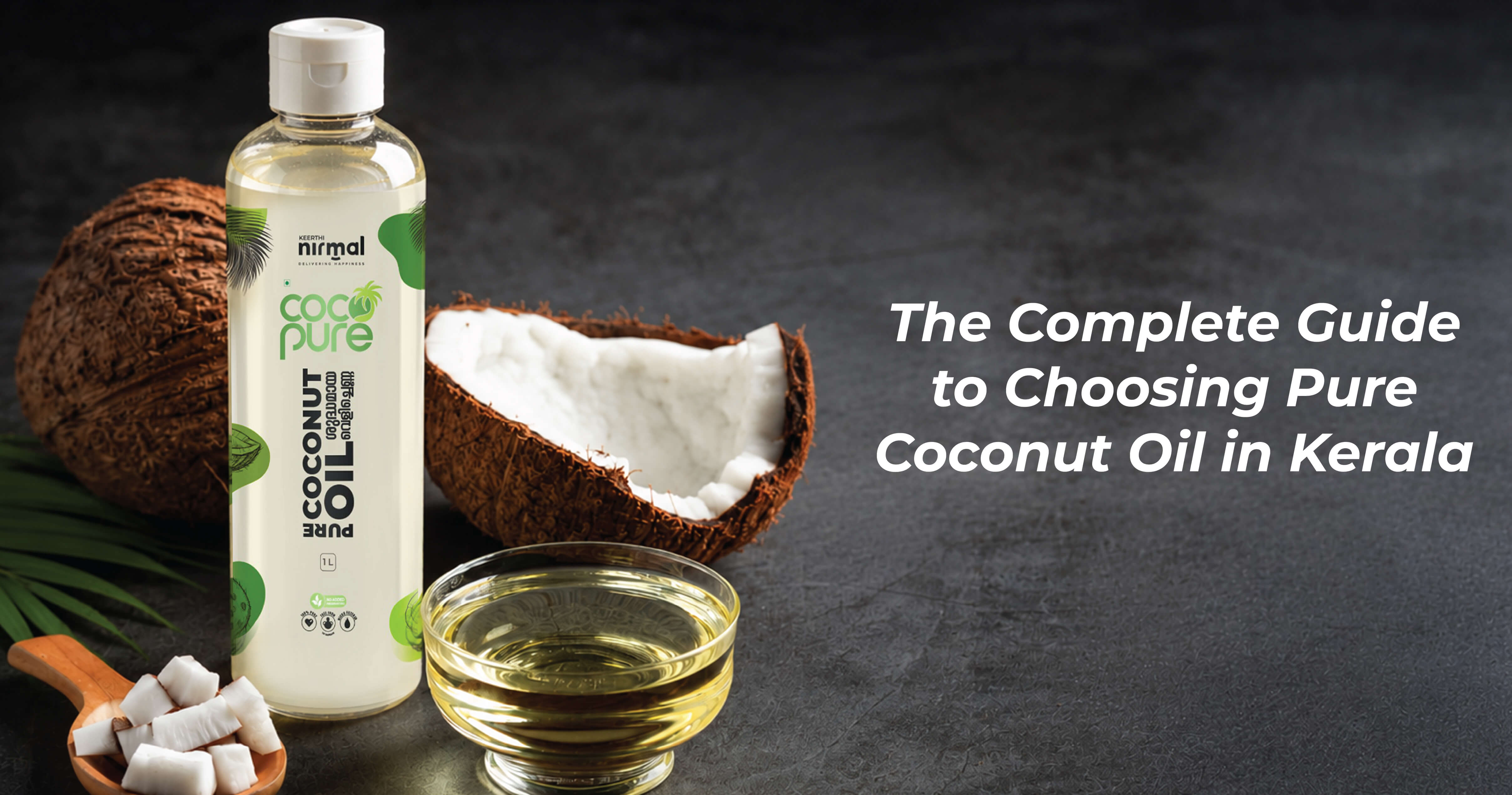
Kerala's relationship with coconut oil runs deep. This guide explains how to identify genuine coconut oil, understand extraction methods, verify purity, and interpret what lauric acid may offer.
Types of Coconut Oil
Virgin coconut oil is pressed from fresh coconut kernels with minimal processing and no chemical refining. Cold-pressed oil is extracted at low temperatures using mechanical pressure rather than solvents, preserving more of the oil's natural compounds. Wood-pressed, or chekku, oil uses a traditional stone or wooden press—a slower, cooler method historically used across Kerala. Refined oil, often made from dried copra, goes through heat or chemical processing to remove odor and extend shelf life—a legitimate product, but a different one from virgin or cold-pressed oil despite the shared name.
How to Verify Purity
A genuine, unblended coconut oil can be checked with a few simple observations. Pure coconut oil solidifies into a uniform white solid at cool room temperature and returns to a clear liquid as the room warms—this is a natural property of the fat, not a defect. Uneven solidification or visible separation can suggest blending with another oil.
Smell is another useful indicator: virgin and cold-pressed oils should carry a distinct coconut aroma, while a flat or chemical smell in oil marketed as virgin is a warning sign. Reading the label for the extraction method and coconut source, rather than relying on words like "pure" or "natural" alone, gives a clearer picture of what's inside the bottle. In India, FSSAI licensing is legally required for food-grade oils and AGMARK certification, where present, indicates the oil has been graded against defined quality standards.
Lauric Acid in Keerthi Nirmal Coconut Oil
Like all genuine coconut oil, Keerthi Nirmal coconut oil naturally contains lauric acid, making up roughly half of its total fat content. It isn't an additive—it's an inherent part of coconut fat itself, present in any oil that hasn't been diluted or blended with other oils.
Potential Health Benefits
- Antimicrobial properties: Lauric acid and monolaurin have shown activity against certain bacteria, viruses, and fungi in laboratory and experimental studies, though most evidence comes from in-vitro research rather than human clinical trials.
- May influence cholesterol levels: Lauric acid can raise HDL, but because it is saturated fat, it can also raise LDL. The overall effect on blood lipids is mixed.
- Provides energy: As a fatty acid, lauric acid is metabolized by the body and can be used as an energy source.
- Potential effects on metabolism: Researchers have studied possible effects on satiety, body weight, and insulin sensitivity, but evidence for meaningful benefits in humans remains limited and mixed.
What This Means When Choosing Keerthi Nirmal Coconut Oil
Because lauric acid content doesn't meaningfully differ between honestly sourced coconut oils, the more useful question when choosing a bottle isn't how much lauric acid it has, but how the oil was made and whether that can be verified. Keerthi Nirmal coconut oil is positioned around that same principle: sourcing fresh Kerala coconut and using extraction methods that preserve the oil's natural composition, rather than relying on lauric acid content alone as a marketing claim.
Summary
Choosing pure coconut oil in Kerala comes down to understanding the extraction method and verifying purity through solidification behavior, aroma, labeling, and certification. Lauric acid, naturally present in any genuine coconut oil, adds a layer of well-documented but carefully qualified potential benefit—not a reason on its own to choose one bottle over another.