What's the Real Difference Between Semi-Bran and Full-Bran Rice?
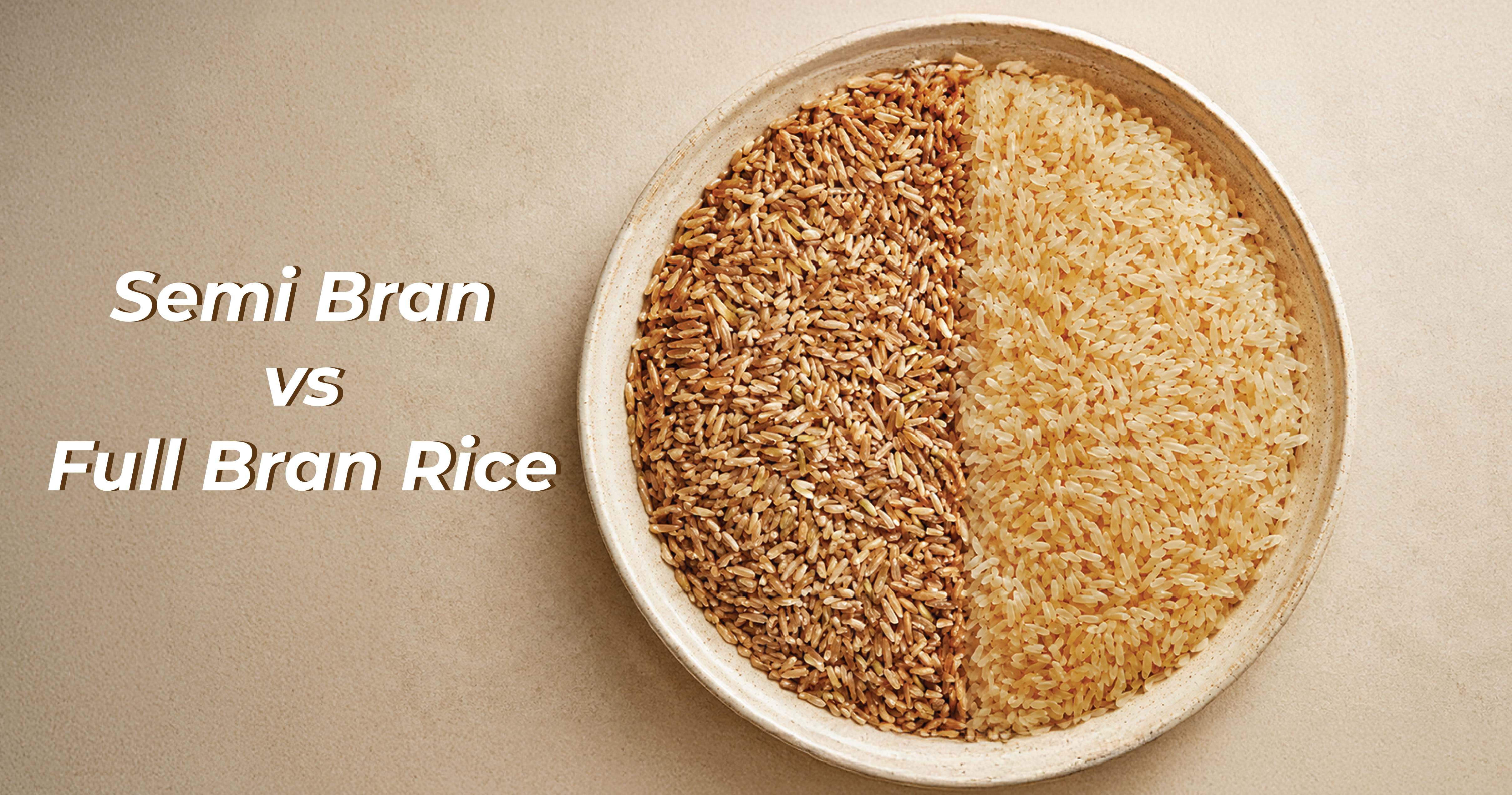
Ask ten people what semi-bran means, and you'll get ten different guesses. The difference between semi-bran and full-bran rice comes down to how much of the bran layer the milling process leaves behind—and that changes how the rice cooks, tastes, and nourishes you.
Where the Difference Actually Starts
Before rice reaches a shop shelf, it is paddy with three layers: the tough outer husk, the nutrient-packed bran underneath, and the soft white starch at the core. Milling removes the husk first. The difference between semi-bran and full-bran begins with what happens next.
Millers can polish the bran away almost completely, leave a thin trace of it for semi-bran rice, or barely touch it for full-bran rice. Because the bran contains much of the grain's fiber, B vitamins, and minerals, the amount retained shapes the final rice.
Semi-Bran Rice: The Middle Ground
Semi-bran rice keeps part of its bran coating—enough to matter without changing your cooking habits. It has a soft golden or pale beige color, a texture between regular rice and full-bran rice, and a cooking time close to polished rice.
It works well for everyday meals, porridges, and weeknight cooking when you want more fiber without rethinking your routine.
Full-Bran Rice: As Close to Natural as Milled Rice Gets
Full-bran rice is produced by removing the husk while leaving almost everything else intact. The grain is firmer and more fibrous, and it usually benefits from soaking for at least thirty minutes before cooking.
It is a strong choice when nutrition is the priority and you are willing to trade some convenience for it.
Semi-Bran vs. Full-Bran, Side by Side
- Bran retained: Partial in semi-bran; near-complete in full-bran.
- Color: Light golden or beige in semi-bran; deep brown or reddish in full-bran.
- Texture: Softer and closer to regular rice in semi-bran; firmer and more fibrous in full-bran.
- Cooking time: Shorter for semi-bran; longer and often preceded by soaking for full-bran.
- Fiber and nutrient retention: Moderate in semi-bran; highest among milled rice in full-bran.
What This Means Nutritionally
Full-bran rice carries the most fiber, B vitamins, minerals, and natural oils from the outer layer. Semi-bran rice provides a meaningful improvement over polished rice, though not the same level of nutrients as full-bran rice. If you are managing a health condition or following dietary advice, discuss the best choice with your nutritionist.
Which One Should You Buy?
If you want added nutritional value without disrupting how you cook, semi-bran rice is the easier switch. If maximum nutrition matters more than convenience and you can plan for soaking, full-bran rice is the stronger pick. Many households keep both and choose based on the meal.
How Keerthi Nirmal Handles the Milling
At Keerthi Nirmal, semi-bran and full-bran rice pass through controlled milling stages designed to stop at the right point. Bran retention is intentional, and every batch is checked for grain texture, moisture, and consistency under ISO 9001:2015, GMP, and FSSAI-compliant conditions.
Frequently Asked Questions
Is full-bran rice the same as brown rice?
They are close cousins, but not identical. Both retain most of the bran layer, while the exact retention depends on the brand and milling method.
Will semi-bran rice taste noticeably different?
It is slightly nuttier and more textured, but subtle enough for most families to adjust within a meal or two.
Do I need to soak full-bran rice?
Soaking for at least thirty minutes helps it cook evenly and in a reasonable amount of time.
Can I swap one for the other?
Usually, yes. Expect to add more water and cooking time when switching from semi-bran to full-bran.